Immenstaad, June 2, 2026 – Weight costs fuel, space costs revenue: in seat development, these two variables determine the economics of a cabin. Raffael Rogg, Group CEO of ZIM Aircraft Seating Group, on the levers behind them.
Weight is fuel
In seat development there is no metric with as direct an effect as weight. Every kilogram that flies on board costs fuel and generates CO₂ emissions over the entire service life of an aircraft. In a seat program with several hundred seats per fleet, this adds up to orders of magnitude that show up in an airline's operating cost accounts. Seat weight is therefore not a technical detail but a direct lever on operating costs and emissions.
Space utilization is revenue
The second variable is space. For an airline, every millimeter of seat pitch is a revenue decision: more legroom increases comfort but, when in doubt, costs a row of seats. Our task is to defuse this equation: to create more legroom without losing seat rows.
A patented solution
That is exactly why we relocated the pivot axis of the backrest. In the patented solution, the pivot axis sits less than 40 millimeters from the seat reference point, instead of the customary 60 millimeters or so. In the production design it is around 20 millimeters. With the seat reference point unchanged, this increases the curvature of the back cushion. The passenger sits more enveloped, similar to a bucket seat, without any need to increase seat pitch. That is precisely where the lever lies: here, comfort comes from the design, not from additional cabin space.
“The Frame”: 15% less weight thanks to the wooden frame
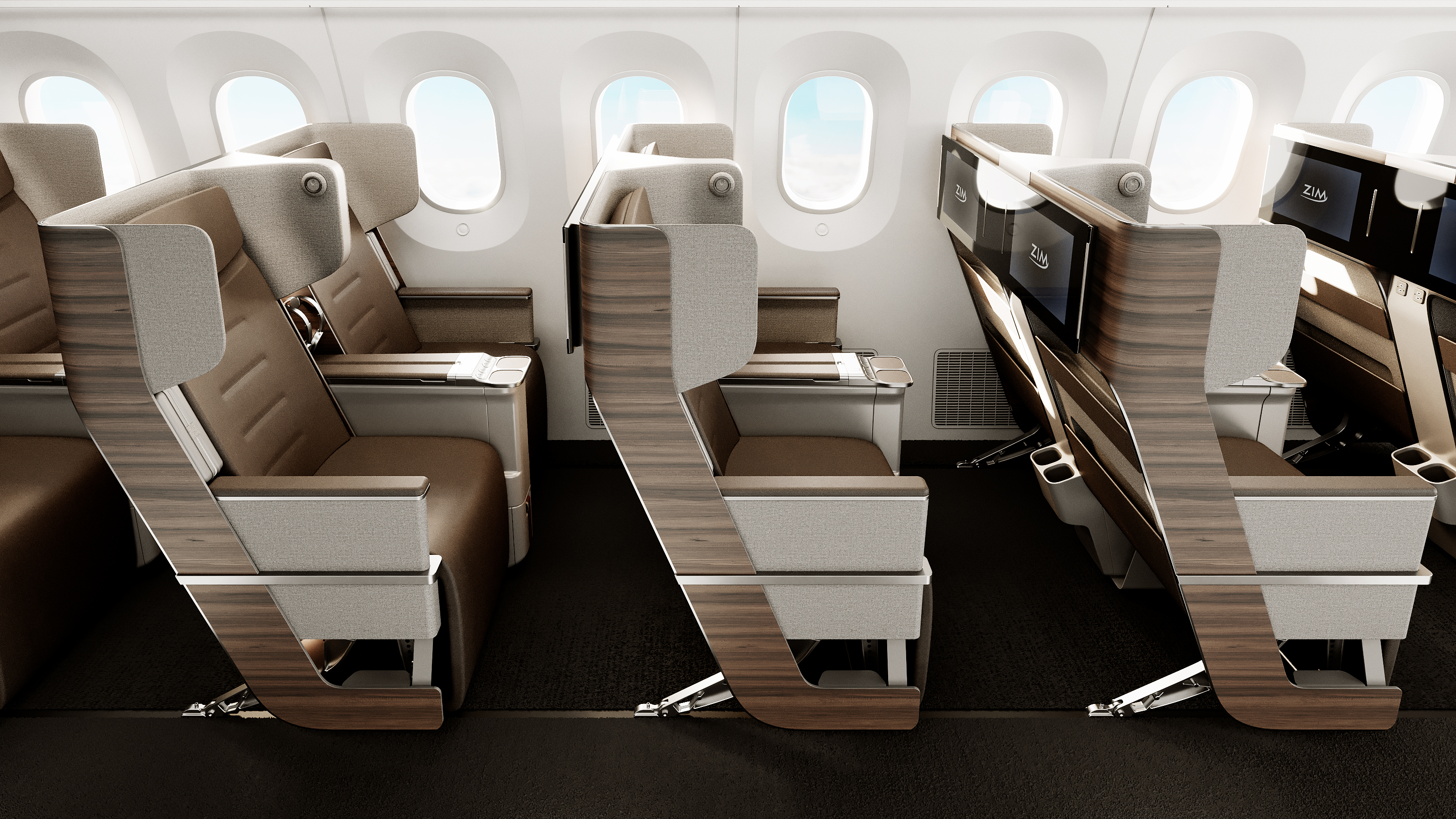
How far this approach goes is demonstrated by “The Frame”, our latest Premium Economy generation. Its characteristic wooden frame is not decoration but a load-bearing, certification-relevant part of the structure, and it makes the seat around 15% lighter than comparable products. Material selection, kinematics and space utilization interlock.
Conclusion
Every gram, every millimeter: in our business, progress does not come from big leaps but from consistent work on these two variables. Those who master them lower the airline's operating costs and increase passenger comfort at the same time.